
Industries
The same disciplines, applied to the assets and decisions particular to each sector.
Aerospace
Aircraft structures are built to carry load for a long time at low weight, and that makes the damage that matters hard to see. A composite panel can take an impact and look untouched while the plies inside have separated. A bonded repair can lose its grip on the parent structure without a mark on the surface. Fatigue cracks start at fastener holes and grow under the paint. Landing gear, wheels, brakes and engine parts take heavy loads in short cycles. Every finding forces a choice: return the part to service, repair it or replace it, and decide when to look again.
We help by finding that damage and saying what it means. We inspect with thermography and ultrasound and use software to pick out defects from the data. We model how damage grows, test materials and repairs to fatigue, and examine failed parts to find the cause, so the next decision rests on evidence rather than caution.
Airline and MRO
An airline earns money when its aircraft fly, and every inspection, removal and delay takes some of that away. Maintenance teams work to tight hangar slots and long task cards, and they have to judge whether a component comes off now or runs to its next check. Landing gear, wheels, brakes and aircraft systems wear in ways that a fixed interval only roughly matches. Records build up faster than anyone can read them, and the runways, taxiways and aprons the aircraft use need looking after too.
We help maintenance teams move from fixed intervals towards measured condition where the evidence supports it. We trial faster inspection methods, including thermography and robotic scanning, and monitor components in service so removals can be planned. We build models that weigh condition against the cost of a delay, and we compare technologies so a team knows which to adopt first. Our airline services have their own section.
Rail
Railway assets work for decades under repeated load. Wheelsets, bogies and brakes take a load cycle with every turn of the wheel, and body structures carry vibration for their whole life. Bridges, viaducts and tunnels age slowly and are rarely easy to reach. Inspection has to fit into a short possession at night or a slot in the depot, so the method has to work in the time available. When one part fails, the question is whether the whole fleet shares the fault, and whether to extend an asset's life or replace it.
We help by choosing and running the inspection that fits the access. We use ultrasound on wheelsets and axles, inspect structures, and monitor condition so maintenance follows the asset rather than the calendar. After a failure we examine the part to find the cause and judge how far it is likely to spread. We review the available techniques so decisions on life extension rest on measured evidence.
Automotive
Cars and commercial vehicles now use many of the materials and joints that aircraft use: composite panels, bonded seams and mixed metals. They also carry batteries, power electronics and systems that drive themselves, and each brings its own ways to fail. A bonded joint can look sound and still be weak. A battery enclosure has to hold together in a crash and keep heat in check. Production runs at high volume, so an inspection method has to be fast and reliable, and a design change after a failure costs money on every unit built.
We help engineers choose materials and joints with test evidence behind them. We inspect bonded and composite parts with thermography and use software that recognises defects in the results. We model how structures and electronics behave under load and heat, test parts to fatigue, and investigate failures to find the cause. For automated driving, we help build the engineering evidence that a safety case needs.
Marine and offshore
Salt water attacks every structure at sea. Steel corrodes, coatings break down and composite hulls take on moisture over time. Offshore structures, pipework, and tidal and wind assets sit far from shore and can only be reached in suitable weather, so a visit is expensive and the next one may be a long way off. Each inspection has to answer the question first time. Owners then have to decide whether to keep an asset running, repair it or retire it, how much to inspect, and which materials and repairs will last.
We help plan inspection so each visit gathers what the decision needs. We use ultrasound to measure wall loss and find cracks, inspect structures, and set up monitoring that reports condition between visits. We test bonded and composite repairs for the marine environment and examine failed parts to find out why they failed, so the next repair lasts longer.
Space
Space hardware gets one chance. Once it leaves the ground nobody can inspect it again, so all the evidence about its condition has to be gathered before it flies. Structures are light and built from composites, sandwich panels, bonded joints and inserts, and pressure vessels hold high loads in very little mass. Thermal-protection materials have to survive conditions that are hard to reproduce on the ground. When an inspection finds a defect, someone has to decide whether the part is still fit to fly, and when a test fails, what to change.
We help by inspecting parts at each stage of manufacture and saying whether a defect matters. We use thermography to find disbonds and voids, instrument ground tests to capture how hardware behaves, and model the effect of a flaw on design margin. We test bonded joints and materials to fatigue and investigate test failures to find the cause, so the next build goes further.
Energy
Energy assets earn only while they run. A wind turbine blade carries large bending loads through bonded joints that can crack or come apart, often high up and far from shore. Solar arrays develop faults across large fields of panels, and tidal generators sit under water. Pipelines and pressure plant corrode and fatigue, and power electronics age with heat. Each inspection costs output and access, so owners want to know when to repair, when to keep running and when to replace, and whether an asset can safely run past its design life.
We help by inspecting quickly and basing maintenance on measured condition rather than the calendar. We use thermography and robotic and remote inspection to cover large areas, with software that picks out defects from the images. We monitor assets in service, track how damage develops, and design and test bonded repairs for blades and other composite structures.
Built environment and civil
Buildings and civil structures fail slowly and out of sight. Water gets into walls, reinforcement corrodes inside concrete, and voids open under pavements long before anything shows on the surface. Bridges and tunnels can only be closed for short periods. Historic masonry, murals and artefacts often cannot be cored, cut or sampled at all, so the evidence has to come from outside. Owners have to decide whether to intervene now or keep watching, which treatment to use, and how much repair the condition justifies.
We help by mapping condition without damaging the fabric. We use thermography to find moisture, voids and detachment, inspect bridges, tunnels and pavements, and apply non-invasive diagnostics to heritage buildings and objects. We model how heat and moisture move through a structure and examine samples where taking them is allowed, so the repair scope follows what is actually there.
Mining and heavy plant
Mining plant runs around the clock under heavy, cyclic and impact loading. Digging and hauling equipment carries loads that crack welds and steel structures. Conveyors, crushers and mills wear fast, and hoppers and chutes take constant abrasion. Shutdowns are short and planned well ahead, so each one has to tackle the right work. Between shutdowns, engineers have to decide what can keep running, what needs repair and what must be replaced, and when a part fails, whether the same fault sits across the fleet.
We help by ranking shutdown work by risk so each one does the most good. We inspect welds and structures with ultrasound and use robotic and remote methods where access is dangerous. We instrument machines to measure the loads they really see, monitor condition, and build models that predict remaining life. We fatigue test and analyse failed parts, then design repairs that last to the next shutdown.
Manufacturing and production
Production inspection has to keep pace with the line. Composite and sandwich parts, bonded assemblies, and machined, cast and welded parts can all carry hidden defects, and an inspection that slows the line costs output on every shift. Tooling and fixtures wear, and when a press, robot or automated cell stops, production stops with it. Before a process goes into production it has to be qualified, accept and reject criteria have to be set, and the inspection equipment has to be chosen before money is spent.
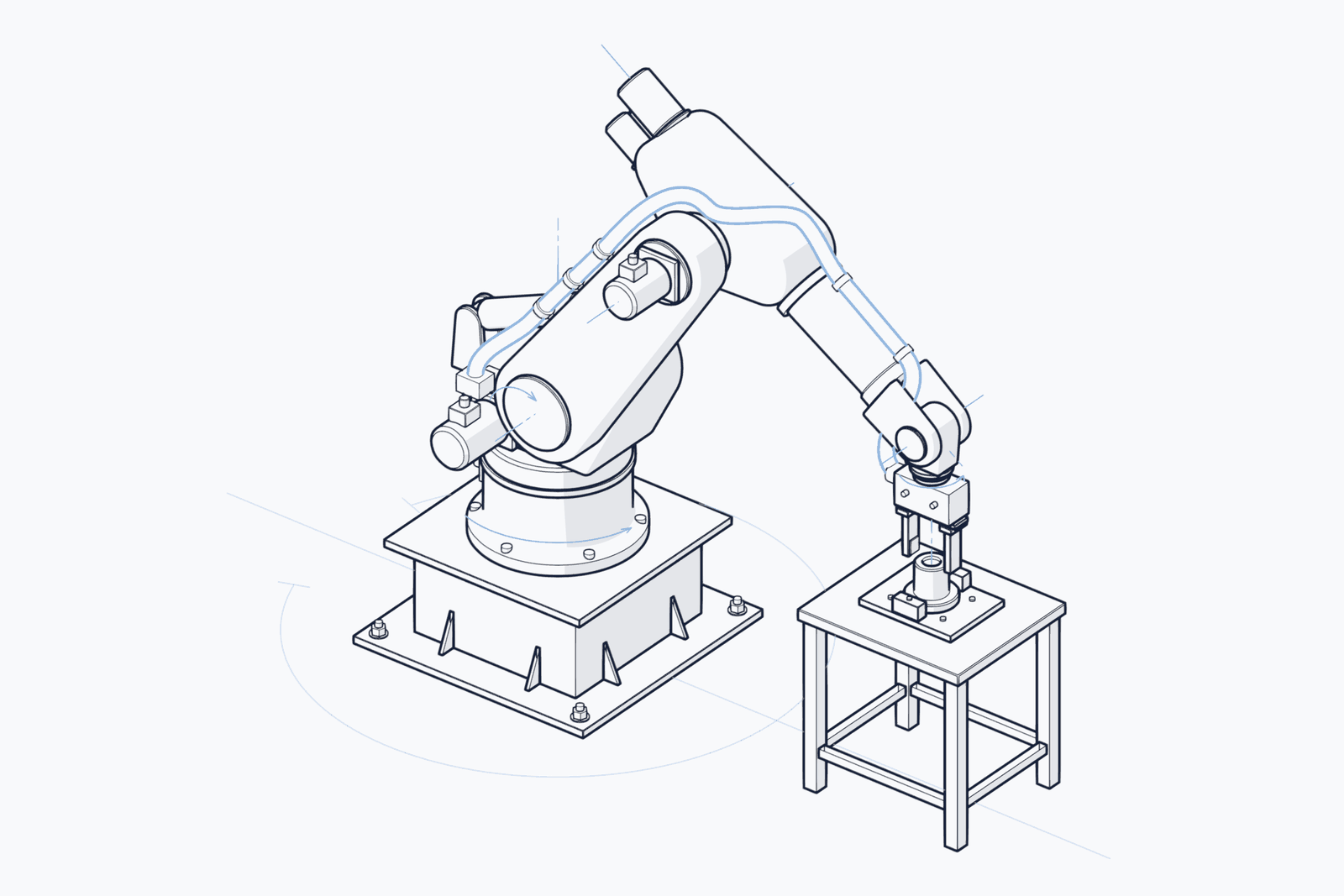
We help match inspection to the process. We review techniques before equipment is bought, try thermography and other methods on real parts, and use software to flag defects at line speed. We monitor presses and robots so maintenance is planned rather than forced. We fatigue test parts and joints and investigate failures to find the root cause, so the process can be fixed at source.